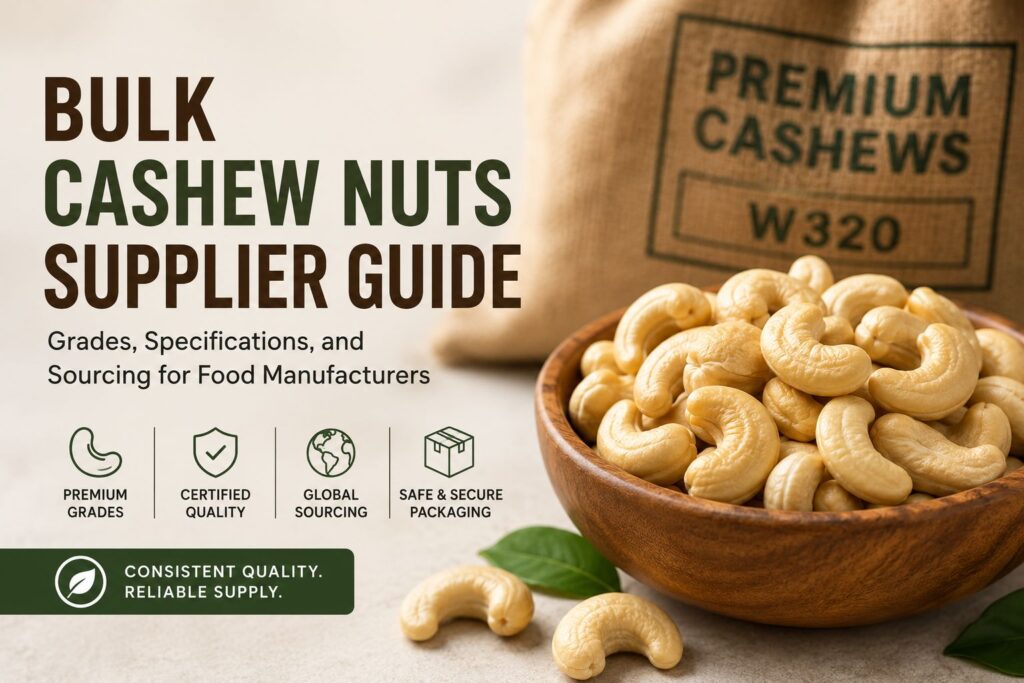
Food manufacturers who work with cashews know one simple truth: the nut is only as good as the batch behind it. One shipment can bake perfectly into a granola bar. Another, from a different lot, can crumble or discolor in the oven. The gap usually comes down to grade, moisture control, and the supplier standing behind the shipment.
This guide walks through how bulk cashew grading works, what specifications actually matter on a production line, and how to pick a wholesale cashew nuts supplier that won’t leave you guessing between containers.
Why Grading Matters More Than Most Buyers Realize
Cashew grading isn’t a marketing label. It’s a size and quality classification that tells a manufacturer exactly what they’re getting before the container even arrives.
The most common grades in global trade are built around kernel count per pound:
- W180: The largest whole white kernels, used for premium snack packs and gourmet retail lines.
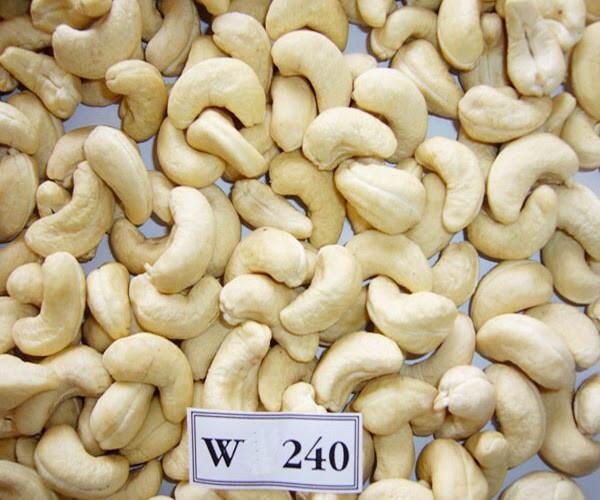
- W240: A mid-size that balances cost and presentation, common in mixed nut blends.
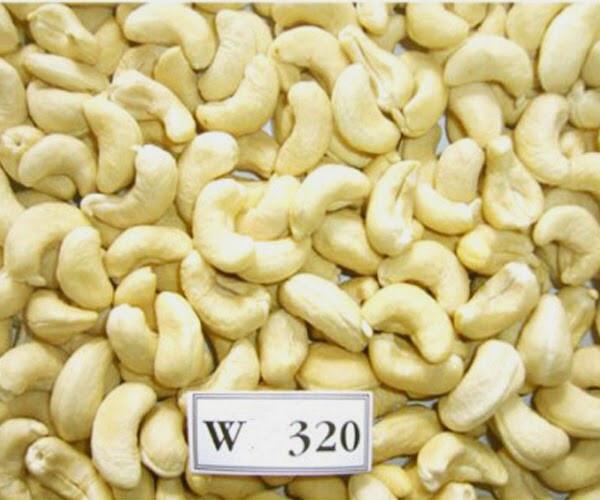
- W320: The most widely traded grade worldwide, favored for its consistency and value.
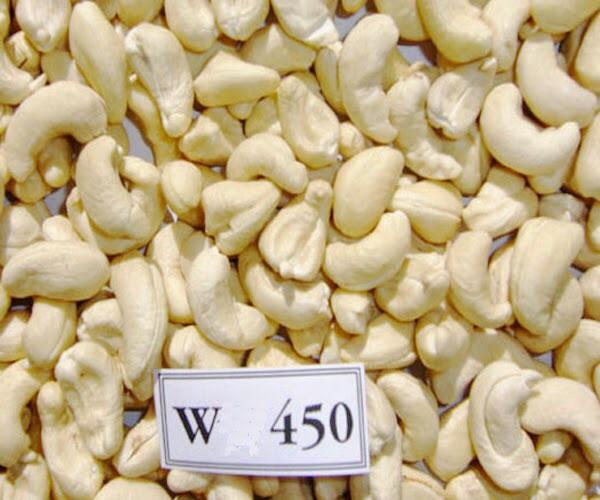
- W450: Smaller kernels, ideal for confectionery, baking, and processed food applications.
The “W” simply stands for Whole White, and the number reflects how many whole kernels make up one pound. Fewer kernels per pound means bigger nuts, and bigger nuts almost always carry a higher price tag.
Beyond size, cashews also come in different forms depending on what a manufacturer needs:
- Whole kernels for snack packs and premium retail
- Splits and pieces for baking, confectionery, and cereal production
- Roasted or salted for ready-to-eat lines
- Flavored varieties such as honey-roasted, chili, or masala-coated are built for changing consumer tastes
A manufacturer producing chocolate-covered cashews doesn’t need the same grade as one filling premium gift tins. Matching the grade to the application is where cost control actually begins.
Specifications That Belong in Every Purchase Order
A grade tells you the size. A specification sheet tells you everything else. Before placing a bulk order, manufacturers should confirm these details with their supplier:
- Moisture content, since excess moisture shortens shelf life and affects roasting behavior.
- Kernel count consistency within the stated grade.
- Color uniformity, as discoloration often signals poor drying or storage.
- Broken kernel percentage, especially for buyers who need whole nuts for retail packs.
- Foreign matter limits and hygiene certification.
- Packaging type, whether vacuum-sealed cartons, vacuum bags, or bulk cases, suited for long-distance shipping.
Manufacturers running automated roasting or coating lines depend on uniform kernel size. A batch with mixed sizes cooks unevenly, and that inconsistency shows up in the final product. This is exactly why specification sheets, not just grade names, should guide every purchase decision.
Where Bulk Cashews Come From and Why It Matters
Cashew production is concentrated in a handful of regions, with India, Vietnam, Nigeria, and Ivory Coast processing the bulk of the global supply. Each origin has its own growing season, kernel characteristics, and processing standard, which is why sourcing strategy matters as much as grading.
Turkey has grown into a key link in this supply chain. Sitting between Asia and Europe, it serves as a distribution point that connects cashew-growing regions with buyers across the Middle East and Europe. Suppliers based here can often move product faster to European and Middle Eastern manufacturers than shippers working directly from origin countries, simply because of the shorter logistics chain.
What a Reliable Cashew Supplier Should Offer
When evaluating a wholesale cashew nuts supplier, food manufacturers should look past price and check the operational fundamentals that actually protect a production run:
- Traceable sourcing: Direct relationships with growers, not unnamed middlemen.
- Certified processing: FSSC-certified facilities that follow international food safety standards.
- Consistent grading: Every batch matches its stated grade, not an approximate one.
- Protective packaging: Materials that guard against moisture, air, and contamination during long shipments.
- Documentation support: Export paperwork, quality certificates, and logistics are handled without back-and-forth delays.
Malatya Apricot works from this exact framework. Cashews are sourced from trusted growers and processed under FSSC-certified conditions, with every stage from shelling to grading to final packaging monitored for uniformity and freshness.
Packaging is chosen specifically to withstand long-distance transport, keeping moisture and contamination out of the equation entirely. For manufacturers, that means fewer surprises when the container is opened.
Beyond Cashews: A Note for Multi-Product Buyers
Many food manufacturers sourcing cashews are also building out lines with other nuts and dried fruits. Malatya Apricot supplies apricot kernels alongside its cashew range, giving buyers a way to consolidate orders under one trusted exporter rather than juggling multiple vendors across different countries.
For manufacturers running snack blends, bakery inclusions, or confectionery lines, this kind of single-source sourcing simplifies logistics and quality control at once.
Building a Sourcing Checklist Before You Order
Before signing off on a bulk cashew order, it helps to run through a short checklist:
- So be sure to check the specific grade you need in your application, not just “standard” or “premium”.
- Request a current spec sheet that shows moisture and broken kernel percentages.
- Inquire whether the processing plant is certified and how it is kept clean.
- Explain the packaging format and how it protects against transit conditions.
- Don’t wait until the order is placed to discuss delivery timelines and documentation support.
A supplier able to answer such questions clearly without vague reassurances is usually worth developing a long-term relationship with.
Final Thoughts
Sourcing bulk cashews for food manufacturing isn’t just about finding the lowest price per ton. It’s about matching the right grade to the right application, confirming specifications on paper, and partnering with a supplier that treats quality control as a daily discipline rather than a checkbox.
Malatya Apricot combines grower-level sourcing, FSSC-certified processing, and export experience across European and Middle Eastern markets to give food manufacturers a dependable path from farm to production line.
For manufacturers ready to place a bulk cashew order or looking to add apricot kernels to the same shipment, the export team is available directly through export@malatyaapricot.com or WhatsApp.