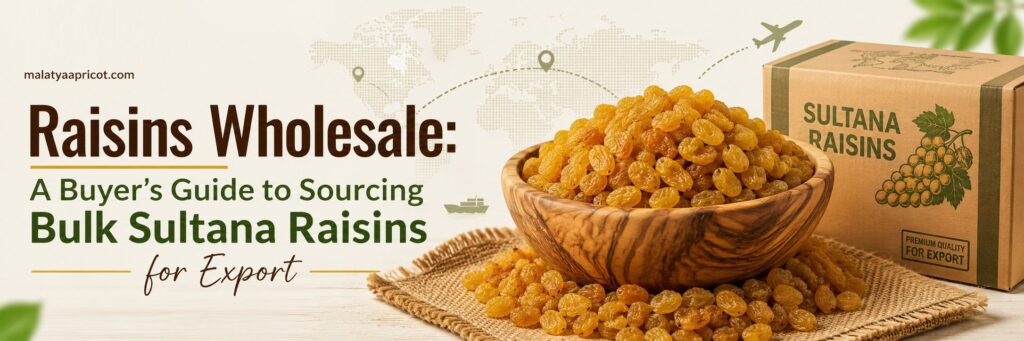
Sultana raisins are widely used across the food industry. Bakeries, cereal manufacturers, snack brands, and hotels all buy them in large quantities. Their mild sweetness and light color make them easy to use in both everyday products and specialty items.
For export buyers, sourcing the right raisins is not just finding a low price. Grade, moisture level, cleanliness, and documentation all affect whether a shipment clears customs without issue and meets the buyer’s expectations on arrival.
Quality problems can be costly. A poor batch may get rejected at customs or fail to meet a buyer’s standards, leading to delays and added costs. This guide explains what to look for when sourcing bulk sultana raisins, so you can choose a supplier you can rely on.
What Are Sultana Raisins?
Sultana raisins come from seedless green grapes, dried either under open sun or through controlled drying, depending on the region and what the buyer asks for. What you get at the end is a light golden to amber raisin, naturally sweet, with a soft and plump bite to it.
Compared to darker raisin types, sultanas carry a milder flavor. That’s the whole reason bakeries and cereal makers reach for them so often; they blend into a recipe instead of taking it over.
A few things worth knowing before you buy:
- Sultanas are naturally seedless, so there’s no extra step to remove seeds during processing.
- The light color comes from the grape variety and drying method, not bleaching.
- They hold moisture reasonably well, which keeps them soft over long shipping routes.
- They work across both sweet and savory dishes, granola bars one day, pilafs the next.
Why So Many Buyers Are Choosing Sultana Raisins for Export
Demand keeps climbing across Europe, the Middle East, North America, and parts of Asia, and there are a few reasons behind that.
More consumers are swapping processed sugary snacks for natural dried fruit, and sultanas fit right into that shift since there’s no added sugar or preservatives when they’re processed the right way. Manufacturers like them too, because they slot into almost any product line without much fuss, from muesli to festive rice preparations.
There’s a practical side to it as well. Sultana raisins travel well. Their moisture level and skin hold up better than some other dried fruits during weeks at sea, which matters more than people realize until a container arrives in bad shape.
What to Check Before Placing a Bulk Order
This is usually where buyers either save themselves a headache or walk straight into one. Here are some things worth checking before placing an order:
1. Grade and Consistency
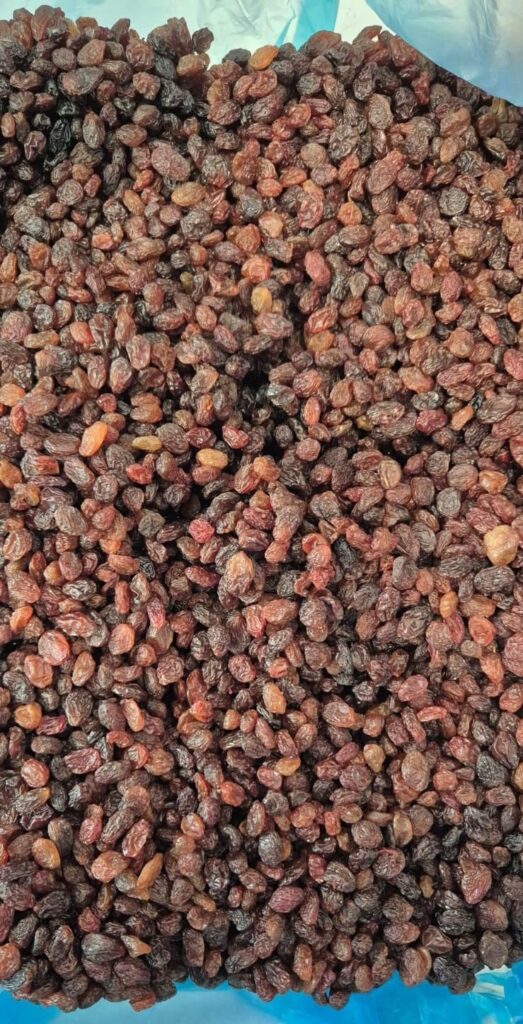
Raisins get sorted by size and visual quality, and a supplier mixing grades inside one shipment is cutting corners somewhere. Ask for the exact grade in writing, and request a sample that reflects what you’ll actually receive, not a hand-picked showcase batch.
2. Moisture Content
Too much moisture invites mold on the way over. Too little, and the raisins turn hard and lose their shelf appeal. A supplier worth working with will share moisture figures upfront without you having to chase them for it.
3. Cleaning and Sorting Standards
Stems, stones, and damaged pieces have no business being in a wholesale shipment. Ask whether sorting is mechanical, done by hand, or both, since a two-step process almost always leaves you with a cleaner final product.
4. Lab Testing and Documentation
For export, paperwork isn’t something you can skip. At minimum, you’ll want:
- Phytosanitary certificates
- Health certificates
- Certificates of origin
- Lab reports covering pesticide residue and microbiological safety
If a supplier can’t produce these without a long delay, they’re probably not set up for export-grade business yet.
5. Packaging Format
Bulk buyers typically need different packaging than retail buyers do. Check whether the supplier can offer bulk sacks, standard carton boxes, or pallet-ready formats built for 20 FCL or 40 FCL containers, and ask about private label options if your brand needs its own packaging on the shipment.
6. Supply Consistency Through the Year
Raisins have a harvest window, but demand doesn’t pause once that window closes. Ask how a supplier manages stock outside peak season. One holding buffer inventory, or running production across more than one region, is far less likely to leave you waiting mid-order.
Mistakes Buyers Keep Making When Sourcing Raisins Wholesale
Even seasoned importers slip up here sometimes. Here are some mistakes buyers keep making when sourcing raisins wholesale:
- Chasing the lowest price without checking the grade behind it. Cheaper often means lower grade, higher moisture, or inconsistent sizing.
- Skipping the sample stage altogether. Always test a physical sample before confirming a large order; no exceptions.
- Overlooking a supplier’s actual export history. One with a real track record already understands the paperwork your destination country needs.
- Ignoring seasonal supply gaps. Some suppliers simply run dry for months after harvest ends.
- Not asking about traceability. Retail buyers and compliance teams are asking for this more and more, so it helps to know the answer before they do.
Questions Worth Asking Any Raisin Supplier
A few honest questions before signing a purchase order can tell you a lot about who you’re dealing with:
- Where exactly are your raisins grown and processed?
- Can you share a certificate of origin and a lab report for this specific batch?
- What packaging formats do you offer for bulk export orders?
- Do you hold stock year-round, or only right after harvest?
- What’s your usual lead time from order confirmation to container loading?
- Who handles the export documentation for my destination country?
A supplier that answers these clearly and quickly is usually one worth sticking with.
A Closer Look at Malatya Apricot’s Raisin Supply
Malatya Apricot supplies sultana, golden, Thompson, black, and flame raisins to wholesale buyers, food manufacturers, and importers across Europe, the USA, the Middle East, and Asia. Production runs out of Turkey, with a second raisin facility in Uzbekistan, so the company isn’t relying on a single region for its entire supply.
That two-location setup matters more than it might sound. It helps cushion buyers against a weaker harvest season in one country, since the other facility can pick up the slack when needed.
What Buyers Can Generally Expect When Working With Them
- Sultana and golden raisins processed with bakeries and food manufacturers in mind, buyers who need a consistent, mild-flavored raisin batch after batch.
- Bulk sacks and carton packaging built for wholesale and export shipments, along with private label packaging once artwork gets confirmed.
- Full export documentation prepared for each shipment, including phytosanitary certificates, health certificates, and lab test reports.
- A dedicated export contact reachable by email, WhatsApp, or phone, usually responding within a business day.
- Year-round inventory, so orders aren’t limited to the weeks right after harvest.
Beyond raisins, Malatya Apricot also exports dried apricots, figs, prunes, dates, almonds, and cashews from the same operation, which is useful for buyers sourcing across several dried fruit categories without needing a separate supplier for each one.
For a quote or sample request on bulk sultana raisins, the export team can be reached directly at export@malatyaapricot.com or via WhatsApp https://wa.link/ee7q5z
Final Thoughts
Sourcing sultana raisins wholesale for export really comes down to a handful of things that don’t change: consistent grading, proper moisture control, clean sorting, and paperwork that actually matches the shipment without delay. Prices matter, sure, but it should never be the only line item on your checklist.
Ask the right questions, request a real sample, and confirm your supplier can hold steady supply across the year. Get those basics right, and your raisin import will keep arriving exactly the way your customers expect, order after order.
Related Blog: Bulk Cashew Nuts Supplier Guide: Grades, Specifications, and Sourcing for Food Manufacturers