
Industrial Dried Apricots Producer and Exporter
Malatya Apricot | INDUSTRIAL Dried Apricots Producer and Exporter
Industrial Dried Apricots are a special subset of dried apricots whose sole purpose is to make these apricots in bulk and send them to the industries as packed products. The goal of the production of these apricots is to ensure that they are consistent and of high quality and efficiency, so that the high-demand industries like confectionery, bakery, and food processing can rely on them. Crops are usually characterized by their flavor and nutritious values when they are used as ingredients in products like cereals, snack bars, and baked goods.
Unlike retail dried apricots that are packaged for direct consumer use, the Industrial Dried Apricots are supplied bulk quantities.
Dried Apricots are naturally sweet and tasty so they make a great base for various delicious dishes. They usually take a long journey to get to the factories where they are processed into the auto production lines and send to the factories.
The Role of an Industrial Dried Apricots Producer
An Industrial Dried Apricots Producer as well as Industrial Dried Apricots Exporter is a business dedicated to perfection, producing dried apricots specifically designed for industrial use.
Production usually entails initially sorting the best apricots, then drying them slowly and evenly under regulated conditions, and finally, making sure all batches are uniform.
In addition to this, the producer has to follow strict regulations concerning hygiene, food safety, and quality control in order to fulfill the requirements of the global market.
Explore premium-quality industrial dried apricots from Malatya
Although the dried apricots that are dried in the sun and those that are artificially dried are similar with respect to the origin and major processing, they, however, have some key differences in their purpose, production, and end use.
1.Purpose and Usage: Conventional dried apricots are usually packed in retail packaging for direct sale to consumers in small quantities. They are generally found in grocery stores, sold in small quantities, and consumed as snacks. On the other hand, Industrial Dried Apricots are designed for large-scale industrial use. These are then used as components of food items that are produced in large quantities, such as pastries, energy bars, and breakfast cereals.
2.Processing and Quality Standards: However, both types of apricots may receive a drying process, but the manufacturing of Industrial Dried Apricots is the more sophisticated one. The focus is on maintaining consistency in moisture content, sizing, and texture in order to satisfy the increasingly complicated requirements of automated machinery used in industrial settings. We follow the proper procedures and technology so that the end product meets predetermined industrial standards.
3.Packaging and Distribution: Regular dried apricots are commonly packaged in the form of consumer-friendly sizes that come in a range of 200 gr to 12.5 kg, which is suitable for individual consumption. The difference is that Industrial Dried Apricots Exporters provide these apricots in bulk packing which comes in big containers or bags thus making them a bit difficult for the factories and large production lines. On the one hand, bulk packaging allows for more efficient transportation and delivery and consequently lower costs for businesses that need large shipments of goods on a regular basis.
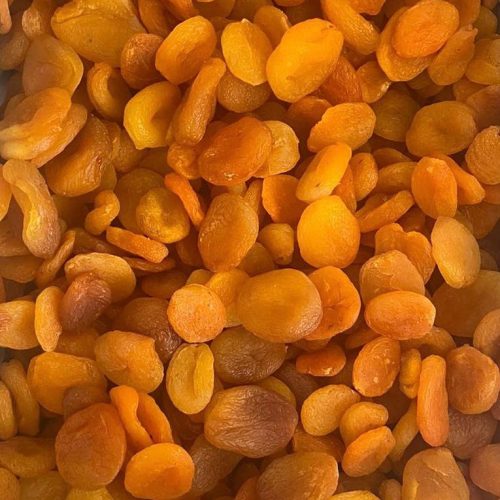
INDUSTRIAL DRIED APRICOTS
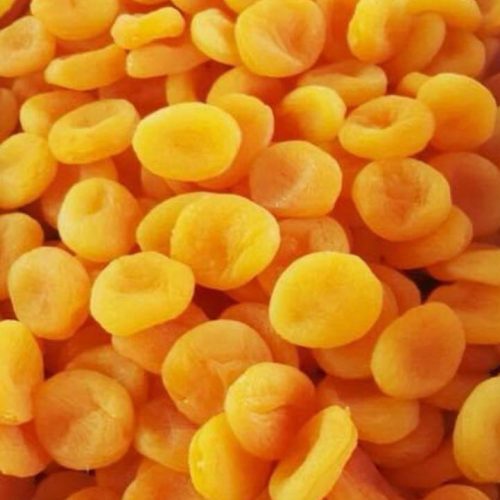
CONVENTIONAL DRIED APRICOTS
Conventional Dried Apricots
Industrial Dried Apricots are a must-have for many manufacturing processes, thus providing the goodness, uniformity, and flexibility needed in food production on a large scale. The comparison between conventional and industrial dried apricots mainly focuses on their applicability, processing standards, and packaging.
We , as an Industrial Dried Apricots Producer and Exporter are the two most important links in the chain of supply needed to meet the global demand for these multipurpose ingredients. Through adherence to high standards and a quality-centered approach, our company has become an important pillar of support for the industries across the globe.
Frequently Asked Questions
1. What are industrial dried apricots actually used for?
They go to food manufacturers making things like cereals, snack bars and baked goods, rather than being sold directly to shoppers. Consistency in moisture, size and texture counts for more here, since these apricots often run through automated processing lines. That’s really the main thing separating this product from a standard retail pack.
2. How does this differ from conventional retail dried apricots?
Retail apricots come packed in consumer sizes, usually 200g up to 12.5kg, and are sold as a snack through grocery stores. Industrial ones are packed in bulk, in containers or bags meant for factories, with tighter control over uniformity so they suit automated machinery. Same fruit, same origin, just a different part of the supply chain entirely.
3. What quality standards govern industrial apricot production?
Strict hygiene, food safety and quality control procedures apply throughout, since these apricots typically become an ingredient in someone else’s packaged food. Moisture, sizing and texture get watched closely to keep every batch uniform. That matters more here than for retail product, given how sensitive automated lines can be to small variations.
4. Can these be ordered in bulk packaging?
Yes, that’s the standard setup for this line, large containers or bags built for factory use, not small retail packs. It also tends to bring shipping costs down per unit for anyone ordering regularly. Buyers with particular packaging needs can raise it directly with the export team.
5. Who typically buys industrial dried apricots?
Mostly food manufacturers in confectionery, bakery and processed food, since the apricots are used as an ingredient rather than sold on their own. Cereal and snack bar makers are common customers too, given how well dried apricot pairs with grains. Anyone needing a steady, uniform supply for ongoing production runs is really the right fit here.
Contact Us
Export Department:
export@malatyaapricot.com
Export Tel Number:
00905399284971
Whatsapp:
00905399284971
General Information:
info@malatyaapricot.com
Address
HANIMINÇİFTLİĞİ MAH, RECAI KUTAN CAD
NO : 286, 44050
BATTALGAZI / MALATYA / TÜRKİYE