Dates hold a unique position in global food trade. The fruit dates back more than 5,000 years to early farms in Mesopotamia and Egypt, yet it remains one of the fastest-growing categories on modern retail shelves today.
Retailers stock dates for their snack aisles. Food manufacturers use them in bakery production, energy bars, and natural sweeteners. Distributors need a supply they can rely on consistently, shipment after shipment.
This rising demand creates a real challenge for buyers: not every exporter can deliver dates at scale while maintaining quality standards.
This guide outlines what to evaluate before entering a wholesale contract, what distinguishes a dependable exporter from a risky one, and how Malatya Apricot fits into that landscape.
Why Bulk Date Sourcing Is Different From Small-Batch Buying
Buying a few boxes of dates for a specialty shop is simple. Buying by the container is not. At scale, small problems turn into big ones fast.
A batch with inconsistent moisture can spoil across an entire shipment. A missing phytosanitary certificate can hold your goods at customs for weeks. A supplier who can’t answer emails on time can throw off your whole production schedule.
Here’s what changes once you move to bulk:
- Consistency matters more than a single great sample. You need the same size, color, and moisture level in container ten as in container one.
- Documentation becomes non-negotiable. Health certificates, lab reports, and certificates of origin have to be ready before the ship leaves port.
- Storage and logistics affect shelf life. Dates that sit in poor conditions during transit lose texture and flavor.
- Communication speed affects your business. A slow supplier response can delay your own customer orders.
Where Wholesale Dates Actually Come From
Most of the world’s commercial date supply comes from a handful of regions. Knowing the origin helps you understand what you’re buying.
Saudi Arabia, Iran, Egypt, the UAE, and Tunisia together produce roughly 80 percent of the world’s dates. Each origin tends to specialize in certain varieties:
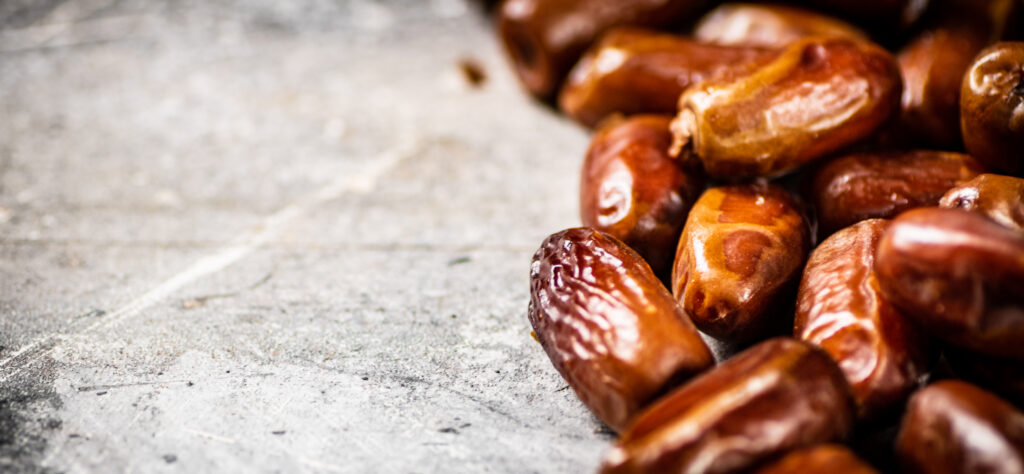
- Medjool: large, soft, caramel-like sweetness. The most requested variety for retail snacking.
- Deglet Noor: firmer texture, lighter color, popular in Tunisia and widely used in baking.
- Sukkari: a Saudi variety known for its honey-like flavor and soft bite.
Buyers sourcing for retail shelves usually lean toward Medjool for its size and eating experience. Buyers sourcing for food manufacturing often care more about consistency and processing behavior than variety name alone.
What to Look for in a Bulk Dates Exporter
Not every supplier who lists dates on a website can actually deliver at wholesale volume with the paperwork intact. Before you commit to an order, check these points:
- Direct sourcing versus trading: A supplier who buys from growers directly usually knows more about the crop than one who buys on the open market and resells. That knowledge shows up in consistency.
- Grading and sorting process: Ask how batches are sorted. Mechanical grading alone misses defects that hand-sorting catches. The best operations use both.
- Food safety certification: Look for certifications such as FSSC 22000, BRC, or similar international food safety standards. These aren’t just paperwork; they reflect actual facility practices around hygiene, traceability, and testing.
- Packaging flexibility: Retail buyers need small-format, shelf-ready packs. Food service and manufacturing buyers need bulk cartons or sacks. A good exporter offers both without forcing you into one format.
- Private label capability: If you’re building your own brand, your supplier should be able to pack under your label, with your artwork and barcode, once you confirm the design.
- Response time: During an active shipment, a day’s delay in communication can cascade into a missed customs window. Ask how buyers reach the export team and how fast they typically hear back.
Quality Control Checkpoints That Actually Matter
A lot of exporters claim “quality control” without saying what that means. Here’s what a real process usually looks like, step by step:
- Batches are sorted by hand and machine to remove damaged or undersized fruit.
- Samples go to a lab for testing on pesticide residue, microbiological counts, and heavy metals.
- Product is packed under temperature-controlled conditions to protect texture and moisture.
- Metal detection screens every batch before final packaging, with no exceptions.
- Lab reports and documentation are sent to the buyer before the shipment loads.
If a supplier can’t walk you through a process close to this, that’s worth asking about directly before you place a large order.
Also Read: Date Market Trends and Export Opportunities in 2026
Packaging Formats for Retail and Food Service Buyers
Retail and food service buyers don’t need the same pack size, and a supplier worth working with should be able to offer both without pushing you toward one option.
- Retail-ready formats: small packs in plastic, hard plastic, or thermoform trays, sized for shelf placement, with or without private label branding.
- Standard wholesale cartons: mid-size carton boxes suited to distributors and smaller food manufacturers.
- Bulk sacks: for large-scale food processing operations that need volume over presentation.
- Palletized shipments: orders built to US or Euro pallet specifications for smoother container loading and customs handling.
Documentation Every Bulk Buyer Should Confirm Before Shipping
Paperwork is where a lot of bulk import deals stall. Before your order ships, confirm the supplier can provide:
- Phytosanitary certificates
- Health certificates
- Certificates of origin
- Lab test reports covering the specific batch you’re buying
- Traceability records back to the farms or cooperatives the fruit came from
Each destination market, whether the EU, the UK, the US, Gulf states, or Southeast Asia, has its own labeling and import requirements. A supplier with export experience in your target market will already know what’s needed, rather than figuring it out after your shipment is stuck at customs.
Malatya Apricot: A Dates Supplier and Exporter Built for Bulk Buyers
Malatya Apricot supplies and exports dates sourced from Saudi Arabia, Tunisia, and the UAE, with Medjool as the primary variety shipped to international buyers.
While the company built its name on dried apricots from Malatya, Türkiye, its date export operation runs on the same production and quality standards behind the rest of its dried fruit lines.
Buyers working with Malatya Apricot on bulk date orders can expect the following:
- Flexible order volumes for importers, wholesalers, distributors, supermarkets, and food processing companies, without requiring buyers to commit to trader-level minimums.
- Batch-level quality control, with each shipment sorted, washed, graded, and packed under a structured process before it leaves the facility.
- Temperature-controlled storage, which helps protect natural texture and sweetness during transit to the buyer’s destination market.
- Private label packaging, built from the buyer’s own artwork, for companies that want to sell dates under their own brand rather than a third-party label.
- A dedicated export contact reachable by email, WhatsApp, and phone, with replies typically returned within one business day.
Facility, Certification, and How to Reach the Export Team
The company operates from Battalgazi, in Malatya province, and its production facility already holds food safety certification, including FSSC 22000, alongside the broader set of standards applied across its dried fruit and nut export lines.
For buyers already sourcing apricots, figs, prunes, raisins, or almonds, adding dates to an existing order can simplify logistics into a single shipment rather than separate supplier relationships.
Buyers can reach the export department directly at export@malatyaapricot.com or by phone and WhatsApp at 00905399284971 to discuss volume, packaging, and lead times for a specific order.
A Few Questions Worth Asking Any Exporter Before You Commit
Before signing off on a bulk date order, it’s worth getting straight answers to a short list of questions:
- What variety are we actually receiving, and does it match what we tested or sampled?
- What certifications apply to this specific product line, not just the company as a whole?
- What’s the lead time from confirmed order to container loading?
- Can packaging be adjusted for our retail format or private label without a large minimum increase?
- Who do we contact if something looks off with a shipment, and how fast do they typically respond?
A supplier who answers these clearly, without hedging, is usually one worth building a long-term order schedule around. Dates are a simple fruit on the surface, but sourcing them at scale rewards buyers who ask the right questions upfront rather than after a shipment has already left port.