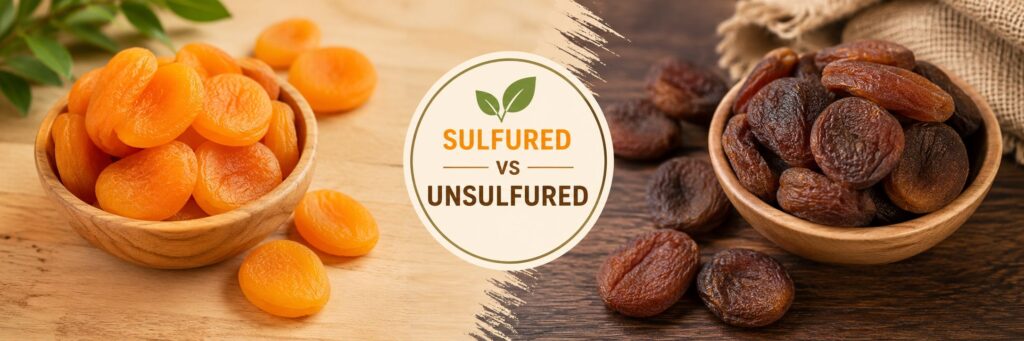
Unsulfured dried fruit is fruit dried without the use of sulfur dioxide. No gas treatment, no spray, no dip. Just fruit, heat, and time.
Sulfur dioxide (SO2) is a widely used preservative in dried fruit processing. Producers apply it to preserve bright color and extend shelf life. Unsulfured fruit is processed without this step. The difference shows up clearly in appearance, flavor, and how the fruit needs to be stored, and it matters to buyers building specific product lines.
This guide explains what “unsulfured” means in practice, how it changes the finished fruit, and how to distinguish unsulfured product from its sulfured counterpart.
The Role of Sulfur Dioxide in Dried Fruit Processing
Sulfur dioxide has been used in dried fruit production for centuries, and it serves two primary functions:
- Color retention: Freshly cut fruit oxidizes and browns quickly once exposed to air. SO2 slows this reaction, allowing apricots to retain their orange color that most consumers associate with the product on retail shelves.
- Extended shelf life: Sulfur dioxide inhibits mold and bacterial growth, which helps the fruit hold up better during storage and transit.
Sulfured dried apricots are a good example of this effect in practice. They retain the bright orange color that most consumers associate with the product on retail shelves.
The Effect of Omitting Sulfur Dioxide
Take away the sulfur dioxide, and the fruit is left to fend for itself. Once it’s cut and exposed to air, natural oxidation kicks in right away. This is the same reaction that turns a sliced apple brown on your kitchen counter.
For dried apricots, that oxidation turns the fruit a deep, dark brown instead of bright orange. That color change isn’t a flaw. It’s proof that no sulfur dioxide was used.
Unsulfured fruit is typically:
- Darker in color: Brown or deep amber tones instead of bright orange or yellow.
- Denser in texture: Without added treatment, the fruit dries down more fully.
- Stronger in flavor: Sugars concentrate more during natural drying, which many buyers describe as a richer, more intense taste.
- Shorter shelf life: Without the preservative effect of sulfur, unsulfured fruit generally needs to be used sooner and stored more carefully.
Clarifying a Common Misconception
It’s worth clearing up a common mix-up. “Unsulfured” specifically means no sulfur dioxide was used. It does not automatically mean organic, and it does not automatically mean no other processing happened at all.
Some unsulfured fruit is simply air-dried or oven-dried without sulfur. Sun-dried fruit, dried the traditional way on open beds under natural heat, is one common method of producing unsulfured dried fruit, since the whole process is just fruit, sun, and time.
If a product is both unsulfured and organic, the label should say so clearly, since those are two separate claims.
Sulfured vs. Unsulfured: A Comparative Overview
| Sulfured | Unsulfured | |
| Color | Bright orange or yellow | Dark brown or amber |
| Flavor | Milder, closer to fresh fruit | More concentrated, deeper |
| Shelf life | Longer | Shorter, needs careful storage |
| Best for | Retail shelves, long transit | Clean label and health-focused products |
Why Buyers Select Unsulfured Fruit
Demand for unsulfured, sulfur-free dried fruit has grown alongside interest in clean label products. Buyers building health food, organic, or preservative-free product lines often look for unsulfured fruit specifically because:
- It fits clean label requirements without extra explanation to the end consumer.
- The flavor holds up in cooking and baking, since the sugars are already concentrated through slow, natural drying.
- It avoids sulfite sensitivity concerns. A small number of people react to sulfites, and unsulfured fruit removes that issue entirely.
That last point matters for compliance too. In many markets, sulfite content above a certain threshold must be declared on the label. Unsulfured fruit sidesteps that requirement altogether.
Application to Dried Apricots
Dried apricots are one of the clearest examples of this split in the market. Standard sulfured apricots keep the bright orange color shoppers associate with the fruit and hold up well over long transit and storage, which makes them a fit for retail and food service.
Sun-dried apricots go through zero chemical treatment. The fruit is laid out on open drying beds under natural summer heat for several days, and that’s the entire process.
The dark brown color that results is a direct sign that no sulfur dioxide was added, and the flavor comes out deeper and more concentrated since the sugars aren’t diluted by any added moisture or treatment.
Both versions are valid products. The right one depends on what a buyer is building: a retail line that needs bright color and long shelf life, or a clean label range where an unsulfured, naturally dried apricot is the better fit.
Also read: What are the Healthiest and Most Consumed Snacks – Dried Fruits and Nuts?
Storage Recommendations for Unsulfured Dried Fruit
Because it lacks the preservative effect of sulfur dioxide, unsulfured fruit needs slightly more care once it’s opened:
- Keep it in an airtight container.
- Store it away from direct sunlight and moisture.
- A cool, dry pantry works for shorter-term use; the fridge extends shelf life further.
Keep export packaging sealed until use. It’s built to protect the fruit during transit and storage.
Unsulfured dried fruit means one thing specifically: no sulfur dioxide was used in processing. That single difference changes the color, deepens the flavor, and shortens the shelf life compared to sulfured fruit.
Neither version is better across the board. It comes down to what the product needs to do: sit on a shelf for months, or deliver a clean label with a bolder, more natural taste.
For buyers sourcing dried apricots specifically, both sulfured and unsulfured (sun-dried) options are available, each suited to a different kind of product line and market.
Related Blog: Top Healthy Dried Fruits and Nuts You Should Eat Every Day