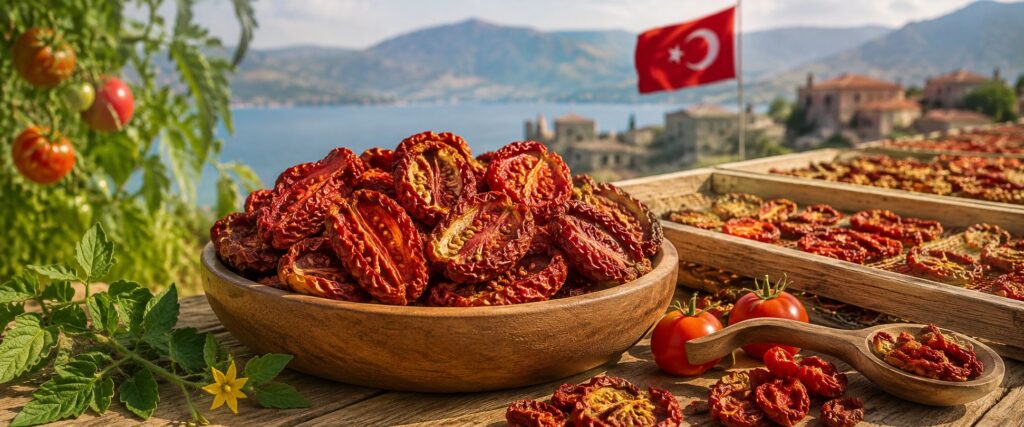
Wholesale Sun-Dried Tomatoes from Turkey: Sourcing Guide for Food Manufacturers and Distributors
Turkey has built a strong name for itself in wholesale sun-dried tomatoes. Manufacturers and distributors keep coming back to Turkish suppliers for flavor, steady supply, and paperwork that holds up at customs.
This guide covers what buyers should ask before placing an order, including product formats, sulfur treatment, quality checks, and packaging options.
If you run a production line or handle import purchasing, this should help you buy with more confidence.
What Are Sun-Dried Tomatoes, and Why Does Origin Matter?
Sun-dried tomatoes start as ripe tomatoes. Drying pulls out most of the natural moisture, and that concentrates the sugars and acids inside the fruit. The result is a deep, savory taste that fresh tomatoes simply don’t have.
There are a few ways to get there:
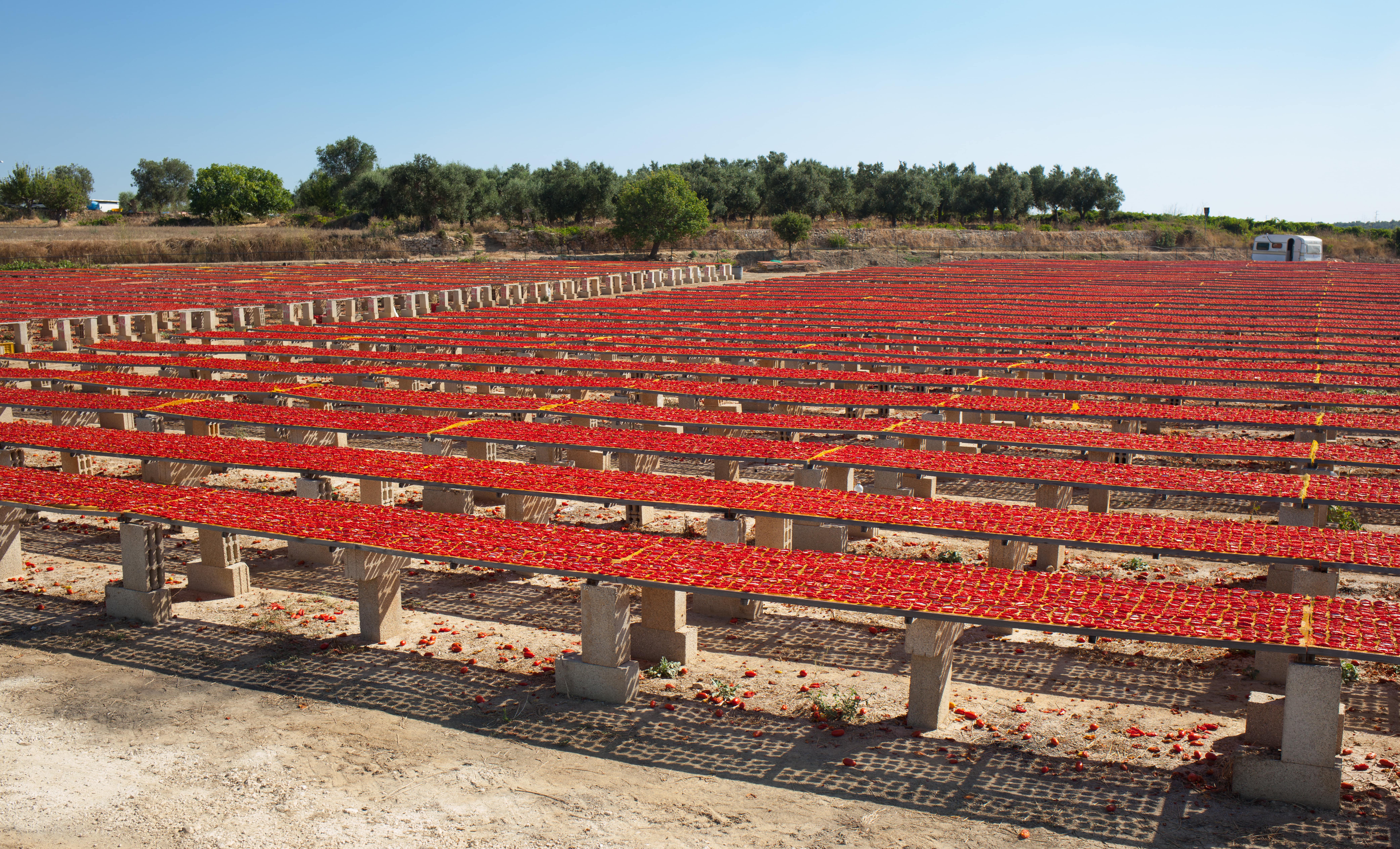
- Sun-drying: The traditional method. Tomatoes sit outdoors and dry under natural heat over several days, which keeps their bright red color and adds extra sweetness.
- Over-drying: Tomatoes dry slowly at low, controlled temperatures. The outcome is similar, but with more consistency from batch to batch.
- Dehydrator or free-drying: Used mostly in industrial settings to keep quality uniform and extend shelf life.
Climate plays a big role there. Regions with hot, dry summers cure tomatoes on their own, without needing heavy artificial drying to get there. That’s a large part of why buyers keep specifying Turkish origin for sauces, snacks, and Mediterranean-style products.
Product Formats Available for Bulk and Private Label Orders
Wholesale buyers rarely need just one type of dried tomato. Different finished products call for different cuts. A supplier that carries a full range saves you from juggling multiple vendors for the same ingredient category.
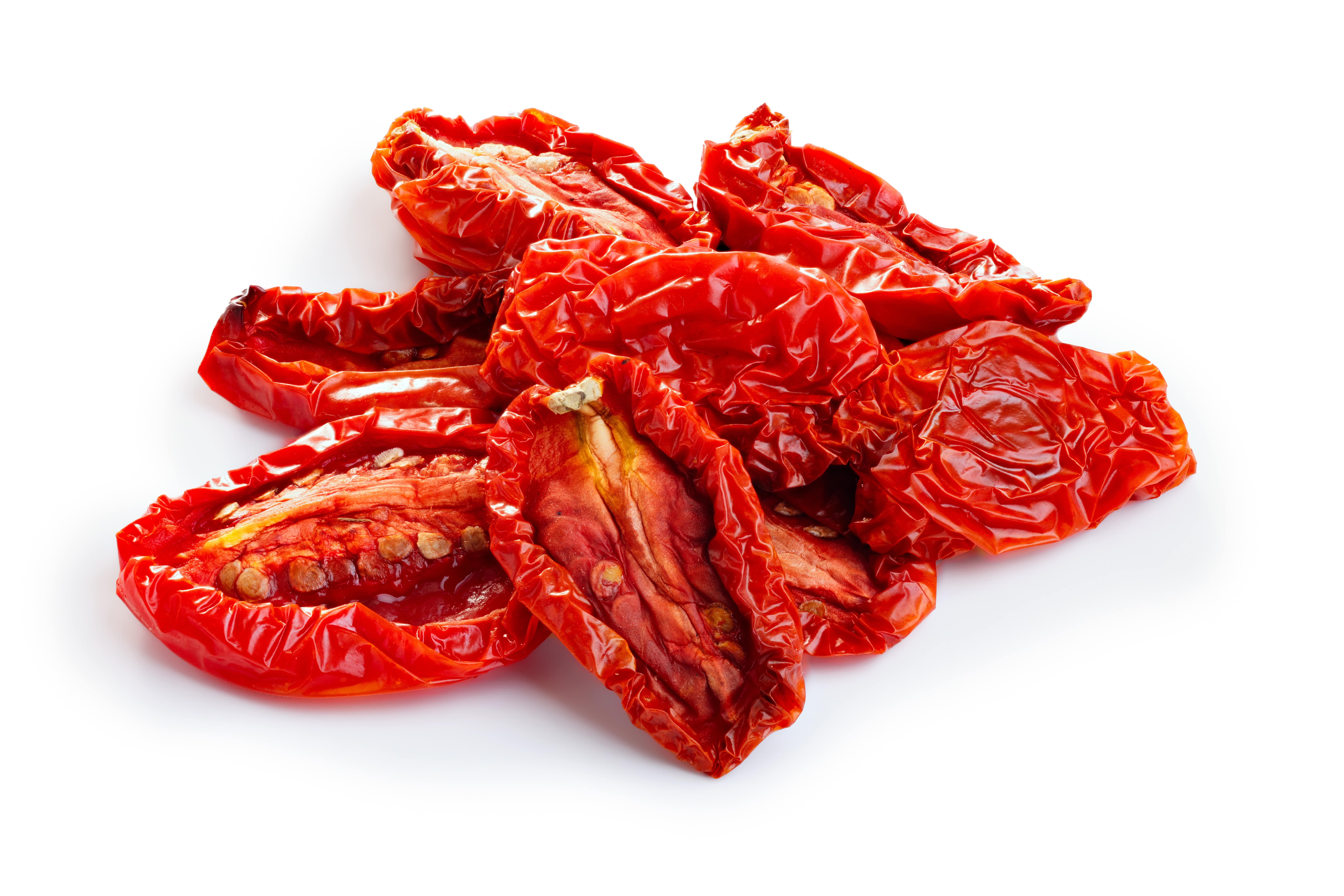
- Sun-dried tomato halves: Handpicked, cut, and dried whole, with or without sulfur treatment. Common in sauces, pasta, sandwiches, and antipasti.
- Diced dried tomatoes: Small, uniform pieces suited to soups, spice blends, sauces, and pre-cooked meals where portion control matters.
- Ready-to-eat dried tomatoes: Soft pieces that need no soaking, used in snack packs, salad toppings, and catering.
- Tomato paste and powder: Paste serves as a concentrated base for sauces and soups. Powder is a shelf-stable seasoning used in spice mixes, snack coatings, and instant foods.
- Baked semi-dried tomatoes: Oven-roasted for a softer, juicier bite with a light caramel note, often used on pizzas, in salads, and as an appetizer topping.
Sourcing all of these from one supplier makes purchasing simpler. You can place a single shipment across several formats instead of managing separate relationships for each one.
Sulfured vs. Unsulfured: Which Should You Order?
This is usually one of the first decisions a buyer has to make, and it comes down to which market you are selling into.
- Sulfured tomatoes are treated with sulfur dioxide during drying. This keeps the color bright and extends shelf life. It tends to suit retail and food service lines where visual appeal carries a lot of weight.
- Unsulfured tomatoes go through no chemical treatment at all. The color turns a deeper red-brown as the fruit oxidizes on its own, and the flavor comes through more concentrated. This option fits clean label and organic product lines without adding extra certification work.
Whichever option you choose, ask your supplier for documentation on sulfur dioxide levels. It protects you at customs and keeps your labeling accurate for whatever destination market you are shipping to.
Quality Checks to Run Before You Commit to a Supplier
Not every supplier tests product the same way, and the differences matter more than buyers sometimes expect. Before signing anything, confirm the following:
- Sorting process: Product should pass through both mechanical and hand sorting to pull out damaged or off-color pieces.
- Lab testing: Ask whether samples go to an accredited outside lab for pesticide residue, microbiological counts, and heavy metals.
- Metal detection: Every batch should pass through a metal detector before packing, with no exceptions made.
- Certifications: Look for HACCP, ISO 22000, BRC, and organic certification such as EU Organic or USDA NOP. Kosher and Halal options may matter too, depending on your target market.
- Traceability: Ask whether the supplier can trace a batch back to the farms it came from. This becomes important if a retail customer or compliance team ever requests that record.
A supplier that owns its own processing facility, rather than buying and reselling through traders, is usually quicker to answer these questions and with more detail.
Packaging and Logistics for Wholesale Orders
Packaging needs vary a lot by buyer type, so it’s worth asking what formats are available before your first order goes out:
- Bulk sacks and large cartons for manufacturers running production lines.
- Standard wholesale cartons for food service and distribution.
- Small retail formats in plastic, hard plastic, or thermoform trays built for shelf placement.
- Private label packaging using your own branding and barcode once artwork has been approved.
Confirm pallet type (US or Euro pallet) and container size (20FCL or 40FCL) early on, since both affect freight cost and delivery timing. A supplier with real export experience across the EU, UK, US, Gulf States, and Asian markets will already know the paperwork each region asks for.
Malatya Apricot: Your Trusted Partner for Sun-Dried Tomatoes
Malatya Apricot is a Turkey-based producer, supplier, and exporter of sun-dried tomatoes and other dried fruit products, working out of a processing facility in the Battalgazi district of Malatya.
- The company supplies sun-dried tomato halves, diced dried tomatoes, ready-to-eat dried tomatoes, tomato paste and powder, and baked semi-dried tomatoes, available in both sulfured and unsulfured options.
- Its export network reaches Europe, North America, the Middle East, Asia, Africa, and Latin America, with major markets including Germany, France, Italy, Spain, the UK, the US, Canada, the UAE, Saudi Arabia, and Qatar.
- Food safety practices are built around HACCP, ISO 22000, and BRC standards, with organic certified, Kosher, and Halal options available.
- The company runs its own cold storage and keeps direct control of its supply chain, which helps keep pricing competitive without cutting into quality.
- Order sizes range from large industrial shipments down to smaller private label runs, with packaging built around each buyer’s format.
Buyers working with production lines, retail sourcing teams, or distribution networks can reach the export department directly for pricing, samples, and current lead times.
Sourcing wholesale sun-dried tomatoes from Turkey really comes down to a handful of decisions: format, sulfur treatment, certifications, and packaging. Getting clear answers on these points before you order helps protect both your production line and your customers.
A supplier that handles its own growing, processing, and export tends to give faster, more accurate answers than one working through several middlemen. That kind of control is often what keeps flavor, safety, and delivery timelines consistent from one order to the next.
For product specifications, certification paperwork, or a wholesale quote, reach out to Malatya Apricot’s export team at export@malatyaapricot.com.